- What does an AV consultant do on a workplace project?
- They plan the meeting rooms, event spaces and displays around how people actually use them, then design the systems: displays, cameras, microphones, speakers and room control. We coordinate that design with the architect, the electrical engineer and your IT team, and manage the work through testing and handover.
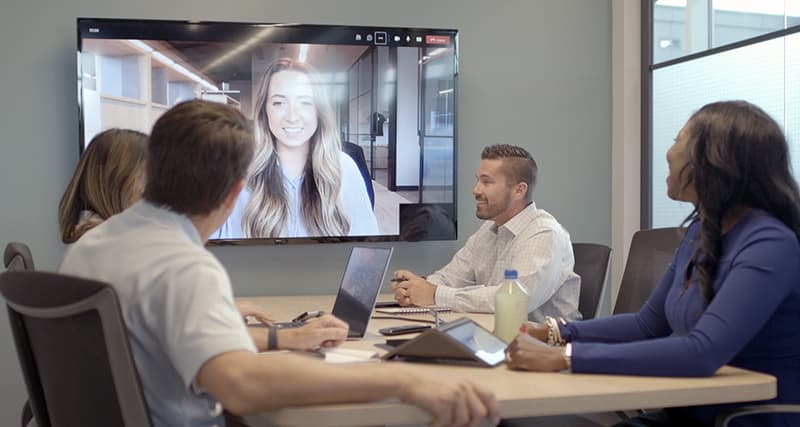
- Where should the camera go in a video conferencing room?
- Directly above or directly below the main display, centered on it. When people look at the people on screen they are also looking at the camera, so the far end sees faces instead of the tops of heads. The display size, the camera's field of view and the microphone coverage are then matched to the size of the room.
- When is a direct-view LED wall the right choice?
- When you need a very large image with no seams, or a display bright enough for a lobby, an atrium or an event space with daylight. LCD screens or projection usually suit smaller rooms better. The right pixel pitch for an LED wall comes from how close the nearest viewers sit.
- Do you work with Microsoft Teams, Zoom and Google Meet?
- Yes. We're not tied to any brand or platform, so we design rooms around the video platform your organization already uses, and the equipment that fits your rooms, your IT standards and your budget.
- What's the difference between an AV consultant and an AV integrator?
- An integrator usually sells and installs equipment. A consultant plans and designs the systems for the client and isn't selling a product. We do the consulting and design, then manage the project through installation, testing and handover, so your advice isn't tied to a brand and one team is accountable for the result.
- When should we bring in an AV consultant?
- As early as possible, ideally during schematic design. Display locations, ceiling microphones, floor boxes, power, data and in-wall blocking all have to be on the architect's and engineers' drawings. Added late, they mean change orders and compromises.